GLoCALL 2013 Information
GLoCALL 2013 Information
|
GLoCALL 2013 Information
|
GLoCALL 2013 invites proposals for presentations that are related to computer-assisted language learning (CALL). Proposals for ‘Papers’ (35 minutes), ‘Workshops’ (80 minutes), ‘Symposia’ (80 minutes), ‘Posters’ and 'Virtual Presentations' should be submitted here by 30 April 2025.
Proposals are encouraged within the sub-themes below, but are not limited to:
Successful applicants will be notified by May 31st, 2013, although those who require an earlier decision for funding purposes may request so in the Comments area of the Proposal Submission Form.
|
GLoCALL 2013 Conference Important Dates |
|
| January 15 |
Opening of proposal submission |
| April 30 |
Deadline for proposal submissions |
| May 31 |
Notices of acceptance sent out |
| August 15 |
Deadline for registration of all presenters |
| August 15 |
Deadline for pre-registration of participants (earlybird) |
| October 17 | Release of a preliminary conference program |
| November 17 | Deadline for regular pre-registration |
| November 28 | Pre-conference workshops |
| November 29 & 30 | Plenary & concurrent sessions |
 Greg Kessler is an Associate Professor of CALL in the Linguistics Department at Ohio University. His research addresses student language use and achievement in collaborative CALL environments and the CALL preparation of teachers. He is currently Action Research Column editor for the journal Language Learning & Technology. He has published widely, including co-authoring the books TESOL Technology Standards (TESOL, 2011) and Technology across writing contexts and tasks (CALICO, 2012). He has taught CALL programs in the USA and Burma, Canada, China, Croatia, Czech Republic, Egypt, Greece, Hong Kong, Hungary, Japan, Jordan, Kazakhstan, Korea, Mexico, Montenegro, Saudi Arabia, Serbia & Turkey.
Promoting Collaborative Activity and Abilities through Social and New Media
New media, including many forms of social media, have created new opportunities for interaction and collaboration. The ability to collaboratively construct content and communities within these new media contexts has so much to offer that we are challenged to reflect upon our language teaching pedagogy. Many technologies, and associated pedagogical practices, have found their way into ubiquitous use in our daily lives, yet they are often overlooked, or even avoided, when we enter the classroom. Maintaining a focus upon the role of teachers and students, the presenter explores how we might proceed to rethink pedagogy in an era of ubiquitous use of new media.
 Glenn Stockwell, Ph.D., is Professor in Applied Linguistics at Waseda University, Tokyo, Japan. He is co-author of CALL Dimensions (2006) with Mike Levy published by Lawrence Erlbaum, and editor of Computer Assisted Language Learning: Diversity in Research & Practice (2012) published by Cambridge University Press. He has published widely in international journals in the field of CALL, and is Editor-in-Chief of The JALT CALL Journal, Associate Editor of Computer Assisted Language Learning and Language Learning & Technology, and on the editorial boards of ReCALL and the CALICO Journal.
Theory in Computer Assisted Language Learning: Complexities and Challenges
Theory in the field of CALL has in some ways been somewhat difficult to define and position, and this has often resulted in theory receiving somewhat peripheral attention in the literature when compared with other fields such as psychology and linguistics. While it has been argued that theory in CALL should be based primarily on theories of second language acquisition (SLA), this has the potential to over-simplify the role of technology in the language learning process, as well as the reasons why technologies are used by both teachers and learners. This presentation examines the complexity of theory in CALL, considering some of the main areas that theory in CALL needs to take into consideration and how each of these provide a different perspective on the process of learning a language through technology. Challenges associated with selecting theories and applying them to both research and practice in CALL are also discussed.
 Andrew Lian is Professor of Foreign Language Studies and Director of Technology-Enhanced Language-Learning Unit, School of Foreign Languages, Suranaree University of Technology in Thailand. He specialises in issues of knowledge and meaning-construction as well as postmodern approaches to learning and teaching. He is one of the pioneers of Technology-Enhanced Language-Learning in Australia. Prior to coming to Thailand, he held five professorial appointments in Australia and the United States. He is on the advisory or editorial boards of seven international peer-reviewed journals. Current research interests include the development of rhizomatic, technology-supported self-regulating language-learning environments, especially the uses of multimedia databases and the conceptualisation and construction of awareness-raising tools for language learners.
Awareness-Raising in a Technology-Supported Language-Learning Environment: Concepts, Challenges and Solutions
Technology-based social change is driving intellectual change in society, e.g., the so-called “google effect”, where people solve problems by interrogating google rather than consulting experts or pursuing formal study. The adoption rate of such behaviours suggests that people enjoy being self-managing and are capable of doing research. Effectively, we are now in a Do-It-Yourself (DIY) world. At the same time, the demand for languages is increasing. For instance, ASEAN/APEC requires the universalisation of English and most people will need to learn one or more languages. This will place pressure on formal and informal language teaching and learning structures. Both will need support and, even more than in the past, the time is right for technology to contribute to this effort. This paper will seek to focus on a critically important aspect of (language and culture) learning amenable to technological support: awareness-raising. In face-to-face settings, awareness-raising is often dealt with by teachers and students working together. In a DIY setting awareness-raising support is more difficult to provide. This paper will seek to problematise the issue, propose some technology-enhanced approaches to awareness-raising and demonstrate some relevant prototype systems.
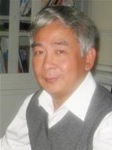 Nguyen Ngoc Hung, PhD, is currently the Executive Manager of the National Foreign Languages Project 2020, known as Project 2020. He has devoted his enthusiasm and willingness for the development of foreign language teaching and learning in Vietnam since the Project started in 2008. He was a Deputy General Director of the International Co-operation Department of Vietnam Ministry of Education and Training (MoET) from 2003 - 2008. Nguyen Ngoc Hung also taught English and trained simultaneous interpreters for more than 27 years.
Language Policy and Technology Application: A Panorama from Vietnam
Decisions to apply any new methods and technology for language teaching and learning are heavily influenced by policies, especially in Vietnam. An overall picture of language education policy will be presented in this presentation, in which a detailed account of the National Foreign Language Project 2020 will be discussed. This will open up possibilities for harnessing technology, of many kinds, for language education at all levels, from primary to secondary and higher education. The presentation discusses the challenges faced by Vietnamese language teachers and explores possible solutions for introducing, utilizing and integrating technologies into the language teaching and learning process. The presentation will end by opening up windows for international cooperation projects with MoET and universities in Vietnam.
For Vietnamese participants only:
http://cfl.udn.vn/glocall2013/
| Earlybird Rates (25 May - 15 August) | |
| Regular Participant (Earlybird) | $250.00 |
| Student Participant* (Earlybird) | $125.00 |
Pre-Registration (16 August - 16 November) |
|
| Regular Participant (Pre-registration) | $280.00 |
| Student Participant* (Pre-Registration) | $140.00 |
On-Site Registration |
|
| Regular Participant (On-site) | $300.00 |
| Student Participant* (On-site) | $150.00 |
Other Fees (25 May - 29 November) |
|
| Virtual Presenter | $60.00 |
| Accompanying** | $60.00 |
| *For full-time students. Must present ID card at registration. ** For non-participant family members. Permits attendance at social events. |
|
| 14:00 - 15:00 | Designing a TELL environment by Andrew Lian In this workshop we will use a brainstorming approach to examine the requirements of L2 learning, determine the extent to which they are amenable to technology support and then design the structure of a basic technology-enhanced language learning support system. |
| 15:10 - 16:10 | Practices that promote collaborative language learning abilities by Greg Kessler This workshop will guide participants through some practical activities, tasks and practices that promote collaborative language learning abilities through the use of new media. The presenter will help participants create contexts that encourage all students to actively engage in a variety of collaborative project based activities. |
| 16:20 - 17:20 | Publishing your research in CALL by Glenn Stockwell This workshop is aimed towards teachers who are still relatively new to the publishing process, and would like to publish in journals related to Computer-Assisted Language Learning (CALL). It introduces the publishing process, outlining the steps from emergence of an idea through to the publication of an article. |
Conference participants should receive a password to enter the presentation slides and virtual section of the site either by email or at the conference. You can enter the course here.
| Sub-Committees |
Names |
E-mail addresses |
| Executive Committee | Jeong-Bae Son (Co-Chair) Siew Ming Thang (Co-Chair) Hoa Phan Van (Local Chair) |
jeong-bae.son at usq.edu.au tsm.2001uk at gmail.com hoauni at gmail.com |
| Program Committee |
Jeong-Bae Son Siew Ming Thang Thomas Robb Long V. Nguyen (Local Coordinator) Khuong Luu Quy (Local Coordinator) |
jeong-bae.son at usq.edu.au tsm.2001uk at gmail.com trobb at cc.kyoto-su.ac.jp nvlong at cfl.udn.vn lqkhuong at clf.udn.vn |
| Proposal Review Committee |
Arif Altun Kazunori Nozawa Antonie Alm Michael Crawford Klaus-Dieter Rossade Vance Stevens Eric Hagley Long V. Nguyen |
altunar at hacettepe.edu.tr nozawa at is.ritsumei.ac.jp antonie.alm at otago.ac.nz crawford at dokkyo.ac.jp klaus-dieter.rossade at open.ac.uk vancestev at gmail.com hagley at mmm.muroran-it.ac.jp nvlong at cfl.udn.vn |
| Publicity Committee |
Kenji Kitao Hiroyuki Obari |
kkitao at mail.doshisha.ac.jp obari119 at gmail.com |
| Hospitality Committee | Toshiko Koyama | mtkoyama at osaka-ohtani.ac.jp |
| Treasury & Registration Committee |
Thomas Robb |
trobb at cc.kyoto-su.ac.jp |
| Webmasters |
Andrew Johnson |
andy at fun.ac.jp |